

Clinical insights on energy, focus, resilience and strategic health.
Why HbA1c is the Longevity Biomarker You Should Be Watching
When it comes to living a long, vibrant life, your average blood sugar matters more than you think. HbA1c (glycated hemoglobin) is one of the most overlooked, yet powerful predictors of healthspan — not just lifespan.
HbA1c reflects your average blood sugar levels over the past 2–3 months. When this number creeps up, it’s not just about diabetes risk.

What actually drives cancer risk
Recently I gave a talk for Danish Cancer Society 'Tidslerne' on environmental cancer risk.
It made one thing painfully obvious: Most people are worrying about the wrong exposures.
Somewhere along the way, the health conversation drifted into a strange place where people obsess over things like the sugar content of fruit.

Obesity is not a calorie problem, it’s a regulation problem
Most conversations about weight are still stuck in calories. And at this point, it’s limiting how we think about the problem entirely. Because weight is not primarily about discipline. It’s about regulation. Last month, I was invited to sit down with senior leadership at Danone to explore novel ways of addressing our obesity pandemic. I chose to explore how to address the obesity pandemic from a regulation angle - what I like to call: satiety engineering. We went over the different phenotypes driving weight gain. Because obesity is merely the symptom of a broken system. If we want to change the trajectory we need to understand the system we are trying to fix. What actually drives appetite, energy, and fat storage? This may seem obvious in writing, yet we are not doing it in reality. Rather we are trying to override the system - white-knuckle it through - and it's not working very well. You cannot willpower your way out of a broken biology. That's just not how biochemistry works.

We Need Doctors to Be Medical Experts—Not Hobbyist Nutritionists
There is a growing and deeply concerning trend: medical doctors stepping outside the field they were rigorously trained in—medicine—and entering domains like nutrition, often based on personal interest, frustration with the healthcare system, or anecdotal experiences.
Let’s be clear: nutrition is a scientific field in its own right.

Are Seed Oils Really That Bad? Let’s Talk Facts — Not Fear
Let’s be honest: if you hang out on health TikTok or deep-dive into wellness podcasts, you’ve probably heard people calling seed oils "toxic," "inflammatory," or even “the root of all chronic disease.”
Seed oils — like canola, sunflower, soybean, and corn oil — have been demonized hard in recent years. But here's the truth: seed oils are not inherently bad, and some of the claims against them are, well… a little overcooked.
Let’s unpack what’s actually true, what’s overhyped, and why omega-6 fats (the main component of seed oils) are literally essential for your body.

Sugar Is Not Toxic: A Scientific Perspective
Sugar is not a toxin. You cannot “detox” from sugar. Sugar often gets a bad rap in today’s health-conscious world, with many headlines labeling it as “toxic.” But when we take a closer look at the science, the reality is more nuanced. Sugar, in and of itself, is not toxic — it is a natural component of many foods and plays important roles in human biology.

ARTICLE FEATURE: Why we struggle with weightloss resistance part 3 (DANISH ONLY)
This is part 3 out of 3 of a series I’ve written for Danish health magazine LNS about why we struggle with weightloss resistance.
Read the full article here (p 18-22): click here and feel free to share.

ARTICLE FEATURE: Why we struggle with weightloss resistance (DANISH ONLY)
This is part 2 out of 3 of a series I’ve written for Danish health magazine LNS about why we struggle with weightloss resistance.
Read the full article here (p 18-22): click here.

NEW TALK: 5 Keys To Thrive Effortlessly
Want to BOOST YOUR EMPLOYEES’ ENERGY, MOOD + BRAIN POWER?
Then you want to book this talk! Simple evidence-based steps to make big changes to how we thrive mentally and physically.
(I just did this talk for VEO technologies in Copenhagen)

Misregulation of blood glucose is a thing for non-diabetics
Lately, I’ve been falling over some contents claiming that blood sugar is always stable in healthy people and the glycemic index is none-sense unless you are diabetic. While there are many misconceptions at the moment about what causes chronically dysregulated blood sugar and insulin resistance - i.e. some claiming that carbs are the issue, and we just need to cut carbs out and eat a meat-based (carnivor) or fat-based (keto) diet - it is simply also not true that blood sugar always keeps stable in healthy people. Or actually it is true that for as long as the body is still healthy enough to produce enough insulin to quickly get the glucose out of the blood stream (in contrast to diabetics) the overall blood sugar levels keep stable - but(!!) the more high spikes and following crashes we get from the foods we eat the less healthy we will be in time. So while we at the peak of our health may be able to have overall balanced blood sugar regardless of what we eat on the glycemic index - this doesn’t mean that it down the road is ideal to continue to engage in, if we are to STAY healthy.“There are lots of folks running around with their glucose levels spiking, and they don’t even know it,” said Michael Snyder, PhD, professor and chair of genetics at Stanford and senior author of the study. The spikes are in fact a health problem because high blood sugar levels, especially when prolonged, can contribute to cardiovascular disease risk and a person’s tendencies to develop insulin resistance, which is a common precursor to diabetes, he said.“We saw that some folks who think they’re healthy actually are misregulating glucose — sometimes at the same severity of people with diabetes — and they have no idea,” Snyder said. Furthermore, when we get a blood sugar spike, followed by a crash this is known to affect cortisol which increases hunger - and thus we have the craving cycle.
Magnesium is the no. 1 most commonly found deficiency today
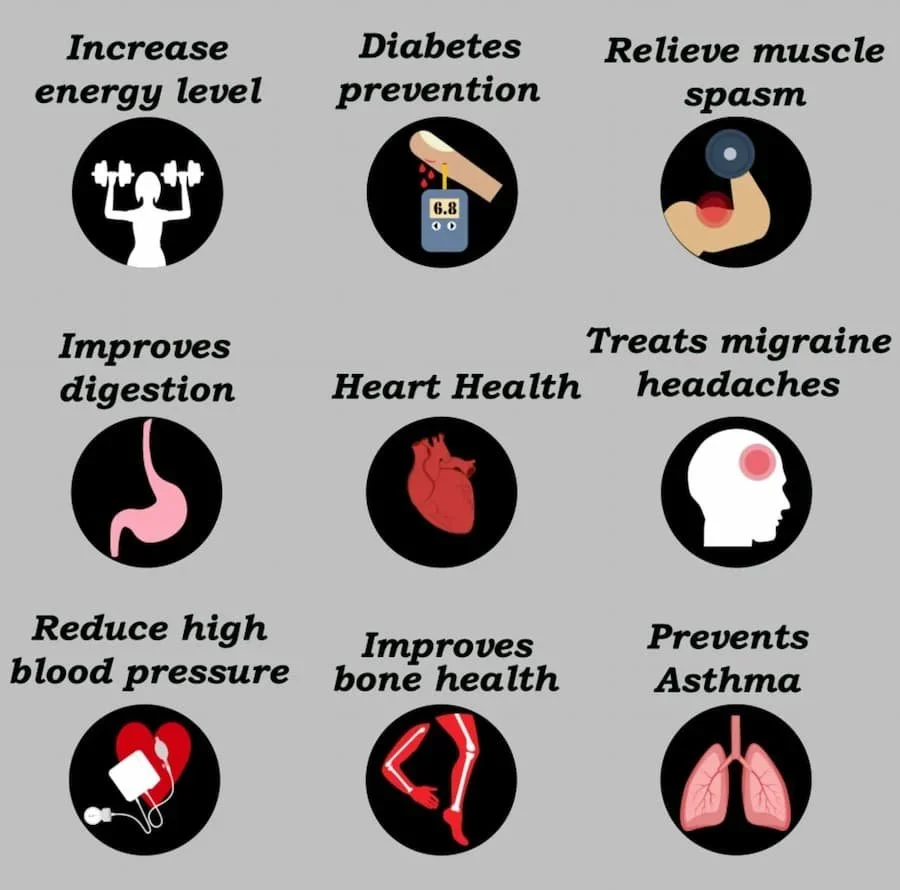
It would be optimal if we could eat enough of all the vitamins and minerals, because food is more recognizable to the body and it is easier to absorb. The sources of magnesium in our food products include whole grains, nuts, sprouts, legumes, cocoa, meat and vegetables. However, what I see when I test, is that many lack it - in 9 out of 10 cases, we see a deficit of magnesium. Magnesium is, together with zinc and silica, among the minerals we commonly find is difficult to obtain an optimal level of through our food because the soil is so depleted and our demands for these minerals have increased due to various stressors in modern life.

Essential minerals in today’s world - NEW TALK (Zoom webinar - Danish only) 2nd of March
Minerals are one the single most important factors in overall health status. We will go over the most important minerals to support gut health, immune health, mental health, skin and bones. To sign up for webinar go here: https://tidslerne.nemtilmeld.dk/294/ Please share.

Cordyceps: more than 21 clinically approved benefits on human health including anti-diabetic, anti-tumor, anti-oxidative, immunomodulatory, sexual potentiator and anti-ageing effects.
“Cordyceps has a long history of use as a lung and kidney tonic, and for the treatment of chronic bronchitis, asthma, tuberculosis and other diseases of the respiratory system. The cardiovascular effects of Cordyceps are being noticed more frequently by researchers as it works through variety of possible ways either by lowering high blood pressure via direct dilatory effects or mediated through M-cholinergic receptors resulting in improvement in the coronary and cerebral blood circulation.”

Why you do NOT want to consume "light" or "sugarfree"
I’ve never been a fan of light products. It’s just counterintuitive to common sense: the body counts calories partly based on taste in combo with calorie density, and if we mess with food, that will very likely have an impact on our appetite-satiety switch, which is the worst thing ever to mess with, if we wish to have a healthy relationship with food, body and weight. It is true: we don’t have science to support that drinking artificial sweetened products can be tied to serious diseases. However, I think that is pretty much besides the point. Just because you don’t get cancer from one single life-style factor, it doesn’t make it harmless.

I'm LIVE on the Holistic Nootropics podcast talking about toxicity
I had pleasure of talking with Erik Levi, the host of Holistic Nootropics podcast about how toxicity is ruining our health today. I love how Erik Levi talks to a lot of very different people, who have different opinions about health which makes for a super balanced podcast experience - he’s had legendary Dr. James Greenblatt (eating disorder specialist) on his show along with Dr. Kurt Woeller (all things lab related expert) to name just two of my favorite people

REPLAY of my talk on The Essential Role of Detoxification in Modern Life
Click on to watch the replay of the webinar I did for ASmallWorld members right here: https://www.youtube.com/watch?v=xDu6RD8UdRw&t=118s Feel free to share it.

Is keto good for low thyroid?
Low thyroid tends to affect the mitochondria negatively, when you then eat a keto diet, all the energy from ketogenesis goes directly to the mitochondria (which are often malfunctioning), to produce energy. This will worsen energy levels and weight for the majority. You are taking the fatty acids of fat and transporting that into the mitochondria, and if there are any issues with the carnitine-shuttle, then there are going to be problems. On top of that, then you are doing a fatty acid oxidation, so you are breaking that down in to acetyl-CoA and making it go through Krebs cycle and the electron-transport chain. This results in a very poor energy outcome in cases, where there is mitochondrial malfunction. Typically, when our thyroid is not working, we are struggling with chemical, infectional and/or heavy metal load, which is affecting the mitochondrial function. We do not want our energy production to have to go through this malfunctioning pathway then - we want to focus on glycolysis instead. The key here to understand is, that as our body changes with time, so do our dietary needs. And healthy eating is only healthy, if we are eating right for our body’s needs.

Why lack of sunlight makes you fatter (study shows).
In the study researchers found that the white unhealthy type of fat cells shrink under sun’s blue light. This breakthrough helps explain why we tend to pack on the pounds in winter regardless of no change in diet/activity. And this may very well lead to light-based treatments for obesity and other related issues like diabetes. Read the full study here: https://www.ncbi.nlm.nih.gov/pmc/articles/PMC5703708/

Not just what you eat but WHEN you eat matters (article link)
Not just what you eat but when you eat. I’ve written an article on how meal-timing is key for hormone regulation, weight-loss and blood sugar: https://www.healthwebmagazine.com/healthy-living/blood-sugar-and-hormone-regulation/ And this is also why intermittent fasting is not for everyone long-term: especially women’s hormones are sensitive to fasting over 12-14 hours and will see negative impact on metabolism, estrogen and adrenals if longer fasting is practiced long-term.

Full-fat dairy (but not low-fat) protects against diabetes type 2
“Decreased Diabetes type 2 risk at high intake of high- but not of low-fat dairy products suggests that dairy fat partly could have contributed to previously observed protective associations between dairy intake and diabetes type 2”
Read the full study here: https://pubmed.ncbi.nlm.nih.gov/25832335/
And keep in mind that what shows up as the most allergenic compounds when we doo food allergy testing are casein and lactose - both very low in butter and cream, hence the reason small amounts of these full-fat items carry health benefits to them, especially as they contain butyric acid which is key for healthy gut flora.