Watching Eric Dane Slowly Disappear on camera Felt Wrong
Last week I watched Last Words of Eric Dane on Netflix.
He died from ALS earlier this year after being diagnosed in 2024, following episodes of weakness in his right hand. He is known for his various acting roles incl. latest in Euphoria.
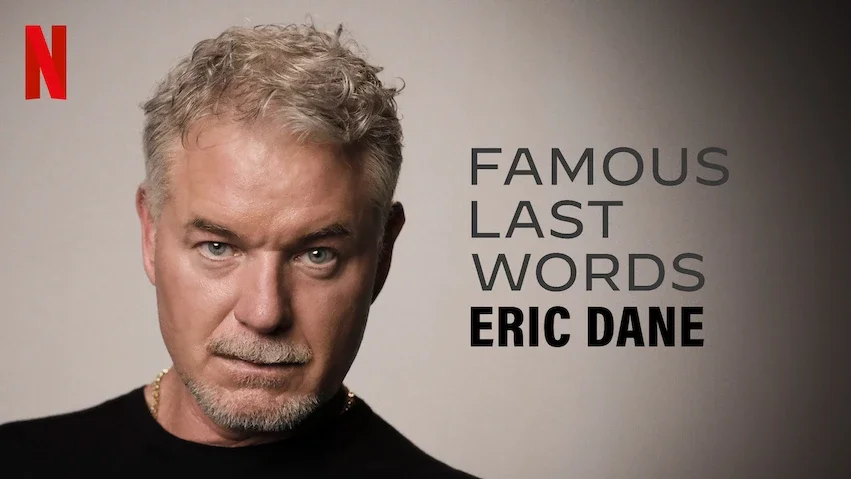
Streaming now on Netflix.
The documentary left me torn between feeling like I had watched something too intimate to be seen by outsiders - and strangely relieved that something raw and real still exists in a world overflowing with fillers, selfies and performative, selfabsorbed, validation-seeking nonsense.
But watching a human being slowly disappear while still alive - unable to intervene, unable to help, simply witnessing the process unfold in real time - left me deeply uneasy.
It also left me ashamed. Ashamed of how spoiled we are. Ashamed of how convinced we become that our own problems are uniquely unbearable. Ashamed of how difficult it is to stay present instead of constantly chasing the next thing, the next level, the next version of life. Always more. And then one day you realize there is no “more.” There was just life happening while you were busy trying to optimize your way out of being human. I actually think shame can serve a purpose. Healthy shame reminds us who we should aim to be. It pulls us out of self-absorption and redirects our attention outward. The inability to feel shame at all is far more dangerous.
I’ve had a few clients with ALS over the years. This is not my specialty, but the reality is that very few people specialize in ALS in any meaningful way.
We ran environmental toxin panels, mitochondrial markers, heavy metals and broader biological stress patterns - and as expected, the findings were often significant.
There is now a growing body of research examining links between environmental exposures, toxic burden and neurodegenerative diseases, including ALS. But once the disease process is clinically active, we are still incredibly limited in what we can actually reverse.
And that raises a difficult question: Is extending life always the same thing as reducing suffering? I don’t know.
What I do know is this: The greatest opportunity we currently have is probably not late-stage intervention. It is earlier detection - before symptoms, before major functional decline, before biological stress accumulates to the point where resilience collapses.
Genes matter. But genes are often waiting for an environment.
Toxic load, chronic inflammation, mitochondrial dysfunction, metabolic stress, sleep disruption, and environmental exposures may all contribute to pushing vulnerable systems closer to disease expression. That is exactly why early risk detection matters. Before crisis hits.
And yes - there is still a huge amount we cannot measure, cannot explain, and do not yet understand. But uncertainty should not become an excuse for paralysis.
“If we can’t do everything perfectly, we may as well do nothing” is one of the most dangerous mindsets in modern health.
ALS remains one of the most devastating diseases I have ever witnessed - a progressive removal of life from a still-living human being, piece by piece.
I hope we eventually become far better at preventing it than we currently are at treating it.
References:https://pmc.ncbi.nlm.nih.gov/articles/PMC4334292/https://alsnewstoday.com/news/inflammation-explain-als-progression-faster/