Should You Take Curcumin Every Day? The Truth About Turmeric and Liver Detox
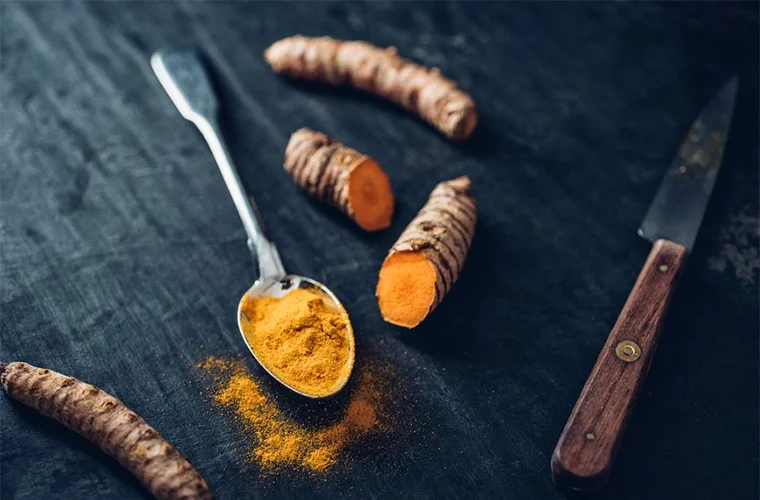
Did you know curcumin can influence liver detoxification enzymes?
Curcumin is often marketed as a harmless daily anti-inflammatory. But biologically, it is more complicated than that.
To understand why, we need to start with how the liver processes chemicals.
Inside liver cells, detoxification is often described in two broad phases: Phase 1 and Phase 2.
Phase 1 enzymes, especially the cytochrome P450 enzyme family, help modify compounds such as hormones, medications, alcohol, environmental chemicals, pesticides, mold toxins, and other xenobiotics. Some compounds are made easier to eliminate. Others are converted into intermediate forms that can temporarily be more reactive.
This is where Phase 2 becomes important.
Phase 2 detoxification helps conjugate these compounds. In simple terms, it attaches molecules to them so they can be made more water-soluble and eliminated through bile, stool, or urine.
The problem is not Phase 1 or Phase 2 individually. The problem is imbalance.
If Phase 1 activity is high while Phase 2 capacity is low, reactive intermediates may build up. That can increase oxidative stress and place additional burden on the liver, gut, immune system, and antioxidant systems.
Phase 2 detoxification depends heavily on nutrient status. The body needs adequate amino acids, minerals, B vitamins, antioxidants, and bile flow to process and remove compounds efficiently.
This is where the conversation around curcumin becomes interesting.
Curcumin has been shown to interact with several cytochrome P450 enzymes involved in Phase 1 metabolism. But it is not accurate to say that curcumin simply “blocks detoxification.” It appears to modulate enzyme activity, and the effect may depend on dose, formulation, individual biochemistry, medication use, and whether it is taken as turmeric in food or as a concentrated supplement.
Curcumin may also influence Nrf2, a key regulator of antioxidant defense and Phase 2 detoxification enzymes. Through this pathway, curcumin may support glutathione-related defenses and cellular protection.
So curcumin is not simply good or bad. It is context-dependent.
This is why I do not view high-dose turmeric or curcumin as something everyone should take every day indefinitely.
If someone has poor bile flow, low protein intake, nutrient deficiencies, low glutathione capacity, high toxicant burden, complex medication use, or is undergoing cancer treatment, curcumin should be used strategically and under professional guidance.
The same applies to methylation.
MTHFR is a gene involved in folate metabolism and methylation. Methylation supports several important processes, including DNA regulation, neurotransmitter metabolism, hormone metabolism, homocysteine balance, and aspects of detoxification. But having an MTHFR variant does not automatically mean someone “cannot detox.” That is an oversimplification.
What matters clinically is the full pattern: folate status, B12 status, riboflavin, B6, magnesium, zinc, protein intake, sulfur tolerance, homocysteine, oxidative stress, gut function, and liver-bile flow.
A diet that supports methylation and Phase 2 detoxification should include adequate:
5-MTHF or food-based folate
Methylcobalamin or adequate B12
Pyridoxal-5-phosphate or adequate B6
Riboflavin
Magnesium
Zinc
Cysteine
Taurine
Sulfur-containing foods
High-quality protein
In practical terms, this means a diet rich in leafy greens, cruciferous vegetables, onion-family vegetables, eggs if tolerated, fish, poultry, lamb, legumes if tolerated, and sufficient overall protein.
This also explains why strict vegan diets can become difficult for some people from a detoxification and methylation perspective. Not because plants are bad, but because certain amino acids, minerals, and active B vitamins can become harder to maintain without careful planning or supplementation. But the opposite extreme is not the answer either.
Loading up on red meat, bacon, butter, and calling it “keto” does not automatically support detoxification. An overburdened liver, poor fiber intake, low plant diversity, poor bile flow, constipation, and excess saturated fat intake can all work against elimination.
The goal is not vegan purity or carnivore extremism. The goal is biochemical sufficiency.
So where does curcumin fit?
Curcumin may be useful in specific situations where inflammation, oxidative stress, or Phase 2 antioxidant signaling needs support. But if the goal is long-term detoxification, it should not be treated as a casual daily supplement for everyone.
For most people, I prefer curcumin used intermittently rather than indefinitely, especially in high-dose supplemental form.
A smarter approach is:
Use turmeric freely as a food and spice if tolerated.
Use concentrated curcumin supplements strategically, not automatically.
Avoid high-dose curcumin during complex medication use unless cleared professionally.
Be especially cautious during cancer treatment, blood-thinning medication, gallbladder disease, liver disease, or before surgery.
Support Phase 2 detoxification first with protein, minerals, B vitamins, antioxidants, fiber, and bile flow.
Test instead of guessing when symptoms or high toxic burden are present.
More is not always better.
Daily is not always smarter.
Context is the protocol.
References: